Essential Banarasi Weaves Every Bride Must Know – BanaraShe Guide
For the modern bride who respects tradition, the journey of finding the perfect wedding trousseau is a deeply emotional one. And when it comes to weddings, no fabric narrates the story of Indian culture, royalty, and timeless love quite like the Banarasi saree.
Woven on the ancient looms of Varanasi, these sarees are more than just clothing; they are heirlooms in the making, carrying the blessings of generations and the legacy of Mughal-era artistry. At BanaraShe, we believe every bride should understand the weave she chooses to wear on the most important day of her life. This guide will walk you through the essential Banarasi weaves, helping you find the one that resonates with your soul.
A Legacy Woven in Gold
Before diving into the weaves, it helps to understand what makes a Banarasi saree so special. The history of these sarees dates back thousands of years, flourishing during the Mughal era when Persian artistry blended with Indian craftsmanship. This fusion gave birth to the intricate motifs we adore today—the flowing bel (vines), the graceful kalga (paisley), and the luxurious use of zari (metallic threads) .
Traditionally, the finest zari was made of pure silver, coated with gold, and woven into the finest silk. Today, owning an authentic Banarasi is about preserving a craft that takes 15 days to six months to complete, relying on the skilled hands of master weavers whose families have practiced this art for centuries
The Six Essential Banarasi Weaves Every Bride Must Know
As you start your hunt for the perfect bridal saree, you'll encounter various names. Here are the essential weaves decoded for you.
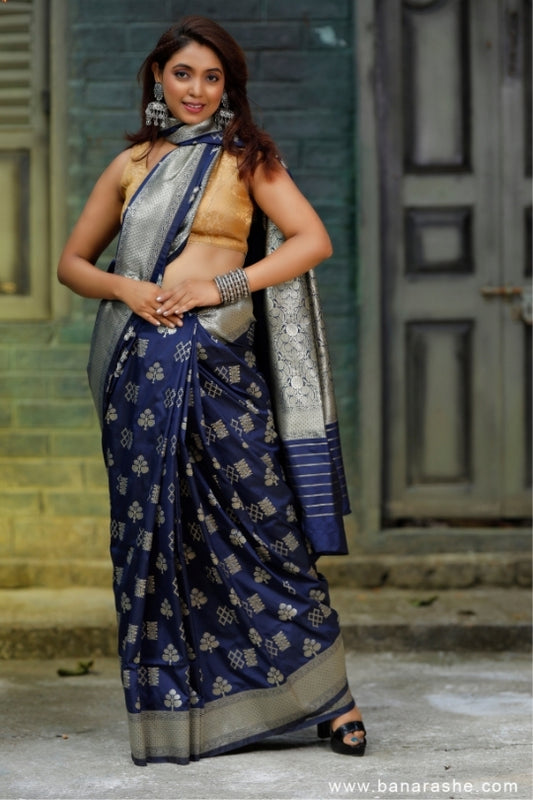
1. Katan Silk Banarasi: The Heirloom Choice
If you are looking for the quintessential bridal fabric, Katan is it. Katan refers to the fabric itself—a fabric made from pure silk threads that are twisted together to create a smooth, strong, and lustrous texture.
Why it's Bridal: It is the most popular choice for weddings due to its durability and rich feel. A Katan silk saree with heavy gold zari can be passed down for generations.
Best For: The main wedding ceremony.
2. Organza (Kora) Banarasi: The Ethereal Beauty
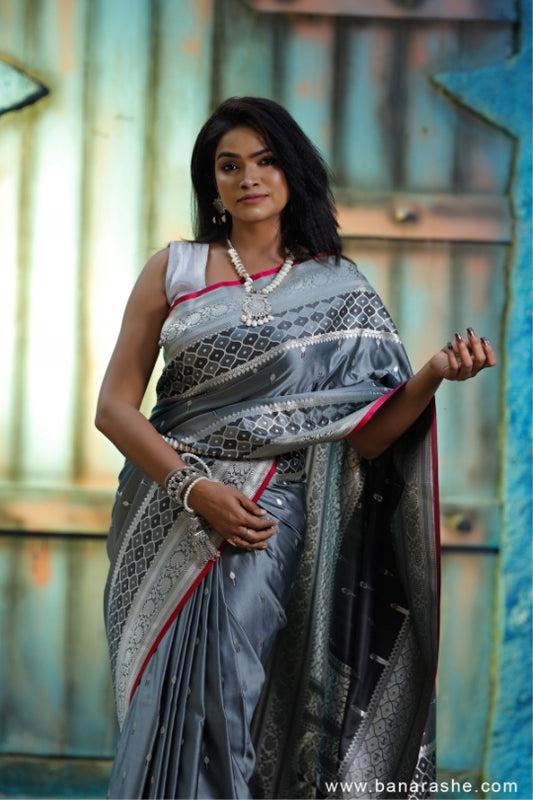
For the bride who loves a lightweight, almost dreamy aesthetic, Kora (meaning raw) silk is a dream come true. It is crisp, translucent, and has a matte finish, making the zari work pop against the fabric .
Why it's Trending: It is a favorite among modern brides for pre-wedding functions or day weddings. Its delicate nature offers an elegant and chic look .
Best For: Mehendi, engagements, or cocktail nights.
3. Shattir Banarasi: The Versatile Classic
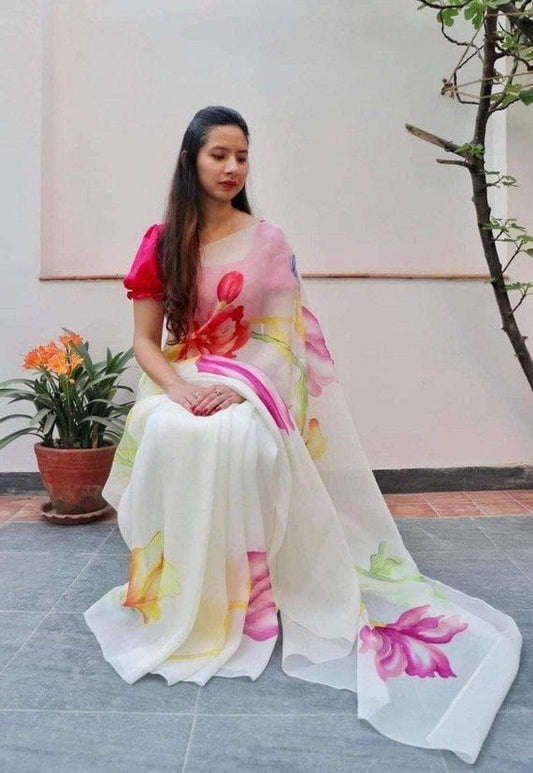
Shattir is a slightly lighter and more affordable silk variant compared to pure Katan. It retains the richness of a Banarasi but is easier to manage and drape.
Why it's a Must-Know: It proves that you don't need to compromise on the Banarasi aesthetic even if you want a lighter drape. It is often used for contemporary designs.
Best For: Reception or wedding guest duties.
4. Tissue Banarasi: The Golden Glow
Imagine a saree that shimmers like liquid gold. Tissue Banarasi sarees are woven with fine silk and a high proportion of zari, giving them a distinct metallic sheen.
Why it's Special: In Tissue weaves, the zari is so dominant that it appears like a golden cloth. It is the definition of opulence.
Best For: Evening receptions and grand dinners.
5. Tanchoi Banarasi: The Subtle Artist
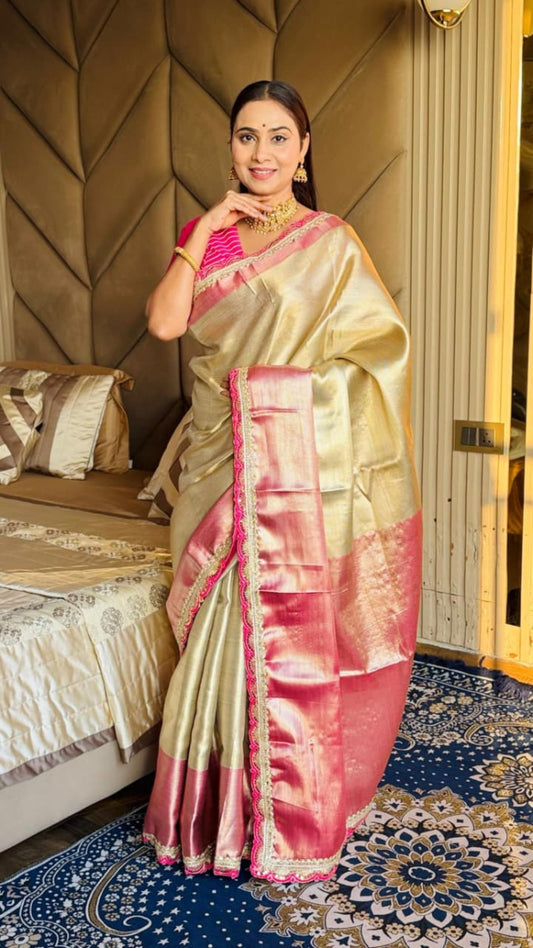
Unlike other Banarasi weaves that rely heavily on zari for impact, Tanchoi focuses on intricate patterns woven with colored silk threads. This technique, inspired by Chinese art, creates a beautiful, satin-like, kaleidoscopic effect on the fabric with minimal zari .
Why it's Unique: It is perfect for brides who want a rich, textured look without the heavy weight of all-over gold zari.
Best For: Intimate weddings or high-tea events.
6. Cutwork (Phekwa) Banarasi: The Lightweight Wonder
Cutwork is a technique where the motifs are woven along with the base fabric, and the excess threads are carefully trimmed from the back by hand. This process creates a lighter, airy feel while maintaining the beauty of the design .
Why it's Practical: It is a beautiful, budget-friendly alternative to the heavier Kadhua weaves.
Best For: Brides who want the look of a heavy saree but the comfort of a lighter one for long hours of celebration.
The Art of the Weave: Kadhua vs. Cutwork vs. Meenakari
Beyond the fabric (Katan, Organza), the technique used to create the design also defines the saree.
Kadhua (Kadwa): This is the most labor-intensive and expensive form of weaving. In Kadhua, each individual motif (like a flower or a parrot) is woven separately and then attached to the fabric. This results in a sharp, clear, and almost embossed look on the front, with no loose threads floating at the back. It is a mark of supreme craftsmanship .
Cutwork (described above): A faster technique that results in floating threads on the reverse, making the saree lighter and more affordable .
Meenakari: This technique adds a splash of color! Inspired by enamel work, Meenakari involves weaving vibrant colored silk threads (like red, green, or blue) into the gold or silver zari motifs, making them look like they are filled with jewel-toned enamel .
Signature Motifs to Look For
As you drape your Banarasi, you are wearing a story. Here are the classic motifs that define these sarees :
Butidar: Scattered small motifs or butis all over the body of the saree.
Jaal: An intricate, repetitive lattice or network pattern that covers the entire saree.
Bel: A creeping, vine-like floral design often found on the borders.
Jangla: A dense weave of floral and vine motifs, considered one of the richest designs.
The BanaraShe Bride: Styling Your Weave
Choosing the right Banarasi is the first step; styling it is the next.
For the Main Wedding: Stick to traditional rich hues like Red, Maroon, Magenta, or Deep Gold. Pair it with a classic gold blouse and kundan jewelry.
For Pre-Wedding Functions: Experiment with pastels (mint, powder blue, lavender) or vibrant pinks and greens. A Banarasi organza in mint green paired with a sleeveless blouse can look stunning for a day event.
The Blouse Game: Don't shy away from contrast blouses. A deep green blouse with a pink Banarasi or a red blouse with a gold tissue creates a royal visual impact.
Jewelry: Let the saree be the star. If your saree has heavy Meenakari or zari work, opt for classic gold or pearl jewelry rather than heavy stones.
How to Spot the Real Deal
In a world full of power-loom imitations, here is how you ensure you are getting an authentic Banarasi weave:
The GI Tag: Look for the Geographical Indication (GI) tag, which certifies it was made in Varanasi.
The Reverse Check: Turn the saree over. A handwoven saree will have slight irregularities and "floats" (loose threads) on the reverse side. A machine-made saree will look perfectly neat on both sides.
The Feel: Pure silk feels soft yet firm. If the zari is real, it will not have a harsh, plastic-like glitter.
A Banarasi weave is not just a purchase; it is an emotion. Whether you choose the heavyweight of a Kadhua Katan or the ethereal shimmer of a Tissue, your Banarasi saree will be a part of your story forever.
At BanaraShe, we celebrate this timeless craft. We invite you to explore our exclusive collection, where every saree is a bridge between Varanasi's glorious past and your beautiful future.
Which weave stole your heart? Tell us in the comments below!


Comments
Post a Comment